
Pediatric PulpotomiesIn East Lake Chula Vista, California
If your child is suffering from a toothache, we offer kid-focused treatments—such as pulpotomies or, when necessary, gentle extractions—to address the source of the problem. After evaluating the tooth, Dr. Tang will recommend the most appropriate option to relieve discomfort and support your child’s dental health so they can get back to feeling like themselves again.
Why does my child need pulp therapy?
When deep decay reaches the nerve (pulp) of a primary tooth, treatment is necessary to address the compromised nerve tissue and keep your child comfortable. We utilize pulp therapy to preserve the tooth whenever possible, performing a pulpotomy for vital teeth to remove the compromised portion of the nerve within the crown, or a pulpectomy for non-vital teeth to remove the affected nerve tissue from within the root canals.
These treatments stop the progression of decay and are often a great alternative to extracting the tooth. Saving a primary tooth is vital because they act as the best natural space maintainers, guiding the proper spacing and eruption of the permanent teeth.
If a baby tooth is lost too early, it can lead to shifting of nearby teeth, crowding, and bite problems that may require orthodontic treatment later on.
After an examination, we'll recommend the most appropriate treatment to protect your child's oral health and keep their smile developing on the right track.

The Benefits of Pulpotomies
Eliminate Pain & Discomfort
Untreated dental decay can lead to severe pain, abscesses, and potentially life-threatening complications like sepsis. Early intervention is vital to prevent the infection from spreading.
Preserving Natural Tooth Structure
A pulpotomy helps preserve your child’s natural tooth structure and allows the tooth to continue functioning normally for chewing, speech development, and guiding the permanent tooth into its proper position. By keeping the baby tooth in place until it’s ready to fall out naturally, a pulpotomy helps prevent early space loss, crowding, and bite issues that can occur when a tooth is removed too soon.
Avoid More Costly, Invasive Care
A tooth with extensive decay that’s left untreated may eventually require extraction and a space maintainer to preserve proper spacing for the permanent teeth. Early tooth loss without the right follow-up care can also lead to shifting, crowding, and may require more extensive orthodontic treatment in the future. Choosing a pulpotomy when appropriate can help avoid more invasive procedures and support healthier dental development for your child.
Our difference
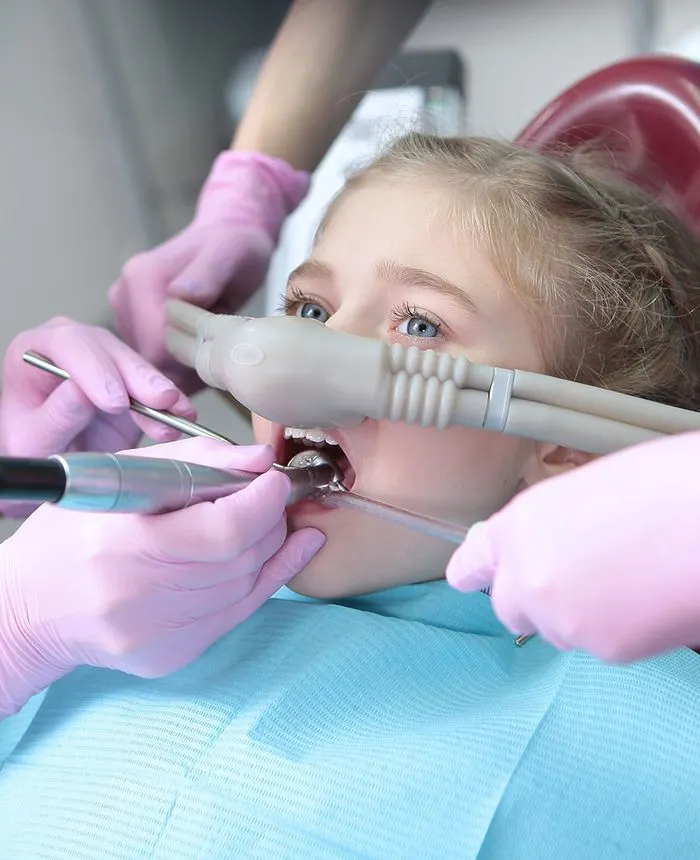
Sedation Options Available
Did you know that sedation is perfectly safe for children? Sedation can help calm wiggly or anxious patients so they can receive dental treatments that may be hard to sit through normally.
The Pulpotomy Treatment Process
Tooth Numbing & Preparation
To begin, your child’s mouth will be numbed. Then, their pediatric dentist will use a dental drill to remove any damaged material from the tooth, and to create a small opening in the tooth, exposing the tooth’s interior.

Treating The Tooth’s Interior
Next, your little one’s dentist will use a dental drill to remove all decayed tooth structure and remove decayed pulp from the upper part of their tooth, eliminating the source of the infection. Then, they will apply a special medication to the inside of the tooth to help it heal.

Sealing & Protecting The Tooth
Once the pulpotomy is complete, your child’s dentist will place a pediatric dental crown on the treated tooth to seal and protect it from any further infection.
FAQs
Frequently Asked Questions
Check out these frequently asked questions, or call us to speak with our team.
Tooth decay begins when bacteria in the mouth feed on sugars from foods and drinks. The bacteria produce acid, which damages the enamel and leaves a cavity in the tooth.
If your child habitually consumes milk, soda, candy, cake, fruit juices, cereals, bread, or other sugary foods and drinks, they may be susceptible to tooth decay. If a cavity forms and the bacteria infect the vulnerable pulp that keeps the tooth alive, it will begin to decay and die. When this happens, your child will experience toothache symptoms and may be a candidate for a pulpotomy.
No. Before beginning treatment, the area is completely numbed with local anesthesia to ensure your child’s comfort. For children who are anxious or have difficulty sitting still, we also offer sedation options to help them remain calm and relaxed throughout the procedure.
By instilling a strong at-home oral hygiene system, you can keep your child from experiencing severe and painful cavities. Start by brushing their teeth at least twice a day for two minutes. Follow this step by helping them floss once a day. In addition, make sure your child maintains a diet low in sugary foods and beverages to keep their smile strong and healthy. It’s also important to schedule an appointment with your child’s pediatric dentist every six months to ensure their oral health is right on track.
A pulpotomy is usually covered by the vast majority of dental insurance policies to some degree. However, we do recommend that you consult with your insurance provider so that you understand your benefits and which treatments are covered.
Most pulpotomies take about 30 to 45 minutes from start to finish, depending on the tooth and the extent of the decay. This includes time for numbing, removing the affected portion of the nerve, placing the medicated material, and restoring the tooth with a filling or crown. Your child can go home right after the visit.
It’s normal for your child to experience mild tenderness, sensitivity to chewing, or slight gum soreness for a day or two after the procedure. These symptoms typically improve quickly and can usually be managed with over-the-counter pain relievers as recommended by the dentist. Your child should avoid very hard or sticky foods until the tooth feels comfortable again. If they have a crown placed, it’s common for the bite to feel “different” for a few days as they adjust. If pain worsens or doesn’t improve, the dental team should evaluate the tooth to ensure proper healing.